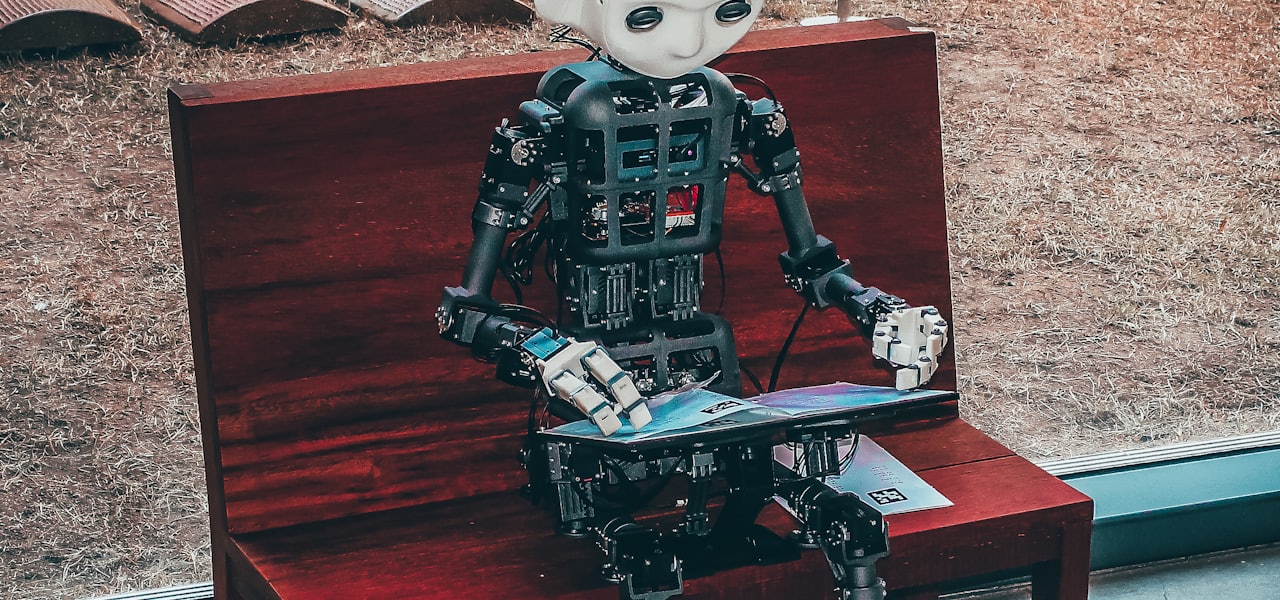
An intelligent decision support system (IDSS) is a decision support system that makes extensive use of artificial intelligence (AI) techniques. Use of AI techniques in management information systems has a long history – indeed terms such as "Knowledge-based systems" (KBS) and "intelligent systems" have been used since the early 1980s to describe components of management systems, but the term "Intelligent decision support system" is thought to originate with Clyde Holsapple and Andrew Whinston in the late 1970s. Examples of specialized intelligent decision support systems include Flexible manufacturing systems (FMS), intelligent marketing decision support systems and medical diagnosis systems. Ideally, an intelligent decision support system should behave like a human consultant: supporting decision makers by gathering and analysing evidence, identifying and diagnosing problems, proposing possible courses of action and evaluating such proposed actions. The aim of the AI techniques embedded in an intelligent decision support system is to enable these tasks to be performed by a computer, while emulating human capabilities as closely as possible. Many IDSS implementations are based on expert systems, a well established type of KBS that encode knowledge and emulate the cognitive behaviours of human experts using predicate logic rules, and have been shown to perform better than the original human experts in some circumstances. Expert systems emerged as practical applications in the 1980s based on research in artificial intelligence performed during the late 1960s and early 1970s. They typically combine knowledge of a particular application domain with an inference capability to enable the system to propose decisions or diagnoses. Accuracy and consistency can be comparable to (or even exceed) that of human experts when the decision parameters are well known (e.g. if a common disease is being diagnosed), but performance can be poor when novel or uncertain circumstances arise. Research in AI focused on enabling systems to respond to novelty and uncertainty in more flexible ways is starting to be used in IDSS. For example, intelligent agents that perform complex cognitive tasks without any need for human intervention have been used in a range of decision support applications. Capabilities of these intelligent agents include knowledge sharing, machine learning, data mining, and automated inference. A range of AI techniques such as case based reasoning, rough sets and fuzzy logic have also been used to enable decision support systems to perform better in uncertain conditions. A 2009 research about a multi-artificial system intelligence system named IILS is proposed to automate problem-solving processes within the logistics industry. The system involves integrating intelligence modules based on case-based reasoning, multi-agent systems, fuzzy logic, and artificial neural networks aiming to offer advanced logistics solutions and support in making well-informed, high-quality decisions to address a wide range of customer needs and challenges.
JotterPad
JotterPad is a text editor app for Android, developed by Two App Studio. It is proprietary software that uses the freemium pricing strategy. == Features == Jotterpad supports the markdown and fountain markup languages. Among its features are themes, synchronisation with Google Drive and Dropbox, dictionary and thesaurus, and snapshots. JotterPad uses a freemium pricing model, which means that a restricted version of the app is offered for free, while access to additional functionality requires payment. About half of the features are available in the free version. The synchronisation feature was originally limited to one account, and in Jotterpad 12 the option to synchronise using multiple accounts was added as a monthly subscription service.
CineAsset
CineAsset was a complete mastering software suite by Doremi Labs that could create and playback encrypted (Pro version) and unencrypted DCI compliant packages from virtually any source. CineAsset included a separate "Editor" application for generating Digital Cinema Packages (DCPs). CineAsset Pro added the ability to generate encrypted DCPs and Key Delivery Messages (KDMs) for any encrypted content in the database. It has since been discontinued, along with CineAsset Player. == Features == == Supported formats == === Input === Source: ==== Containers ==== AVI MOV MXF MPG TS WMV M2TS MTS MP4 MKV ==== Video Codecs ==== JPEG2000 ProRes 422 DNxHD® YUV Uncompressed 8-10 bits DIVX® XVID® MPEG4 AVC / H-264 VC-1 MPEG2 ==== Image Sequences ==== BMP TIFF TGA DPX JPG J2C ==== Audio Files ==== WAV MP3 WMA MP2 === Output === Source: ==== JPEG2000 ==== 2D and 3D at up to 4K resolution Bit Rate: 50–250 Mbit/s (500 Mbit/s for frame rates above 30 fps) Speed: Faster than real-time processing when using optional render nodes ==== MPEG2 ==== I-Only or Long GOP 1080p up to 80 Mbit/s ==== H264 ==== 1080p up to 50 Mbit/s ==== VC1 ==== DCP wrapping only (no transcode)
Piranesi (software)
Piranesi is an interactive paint system that enables the user to create artistic images from 3D scenes created using conventional modeling applications. == Image format == Piranesi uses the proprietary EPix file format. For every pixel, additional information is stored, such as distance from the viewer and material settings. EPix files can be rendered from 3D scenes using a fixed viewpoint by Piranesi's companion software, Vedute.
Blobotics
Blobotics is a term describing research into chemical-based computer processors based on ions rather than electrons. Andrew Adamatzky, a computer scientist at the University of the West of England, Bristol used the term in an article in New Scientist March 28, 2005 [1]. The aim is to create 'liquid logic gates' which would be 'infinitely reconfigurable and self-healing'. The process relies on the Belousov–Zhabotinsky reaction, a repeating cycle of three separate sets of reactions. Such a processor could form the basis of a robot which, using artificial sensors, interact with its surroundings in a way which mimics living creatures. The coining of the term was featured by ABC radio in Australia [2].
Poop Map
Poop Map is a social app where users can track on a map where and when they defecate. In addition to logging location and time of each bowel movement, users can also add a photo, "like" other users' logs, and rate each account. The social elements of the app allow for groups of users to create a competitive league. Certain behaviors unlock achievements in-app. == Development == The app was created by app developer Nino Uzelac. It was launched in July 2013. == Popularity == The app charted at number one on the Apple App Store charts in 2021 after going viral on TikTok. As of September 2024, the app has a 4.8 rating on the App Store and more than 58,000 ratings. It also has more than one million downloads on the Google Play Store. Poop Map is notably popular among hikers, and has been written about in the outdoors magazine Outside.
Cybernetics
Cybernetics is the transdisciplinary study of circular causal processes such as feedback and recursion, where the effects of a system's actions (its outputs) return as inputs to that system, influencing subsequent actions. It is concerned with general principles that are relevant across multiple contexts, including engineering, ecological, economic, biological, cognitive and social systems and also in practical activities such as designing, learning, and managing. Cybernetics' transdisciplinary character means that it intersects with a number of other fields, resulting in a wide influence and diverse interpretations. The field is named after an example of circular causal feedback—that of steering a ship (the ancient Greek κυβερνήτης (kybernḗtēs) refers to the person who steers a ship). In steering a ship, the position of the rudder is adjusted in continual response to the effect it is observed as having, forming a feedback loop through which a steady course can be maintained in a changing environment, responding to disturbances from cross winds and tide. Cybernetics has its origins in exchanges between numerous disciplines during the 1940s. Initial developments were consolidated through meetings such as the Macy conferences and the Ratio Club. Early focuses included purposeful behaviour, neural networks, heterarchy, information theory, and self-organising systems. As cybernetics developed, it became broader in scope to include work in design, family therapy, management and organisation, pedagogy, sociology, the creative arts and the counterculture. == Definitions == Cybernetics has been defined in a variety of ways, reflecting "the richness of its conceptual base". One of the best known definitions is that of the American scientist Norbert Wiener, who characterised cybernetics as concerned with "control and communication in the animal and the machine". Another early definition is that of the Macy cybernetics conferences, where cybernetics was understood as the study of "circular causal and feedback mechanisms in biological and social systems". Margaret Mead emphasised the role of cybernetics as "a form of cross-disciplinary thought which made it possible for members of many disciplines to communicate with each other easily in a language which all could understand". Other definitions include: "the art of governing or the science of government" (André-Marie Ampère); "the art of steersmanship" (Ross Ashby); "the study of systems of any nature which are capable of receiving, storing, and processing information so as to use it for control" (Andrey Kolmogorov); and "a branch of mathematics dealing with problems of control, recursiveness, and information, focuses on forms and the patterns that connect" (Gregory Bateson). == Etymology == The Ancient Greek term κυβερνητικός (kubernētikos, '(good at) steering') appears in Plato's Republic and Alcibiades, where the metaphor of a steersman is used to signify the governance of people. The French word cybernétique was also used in 1834 by the physicist André-Marie Ampère to denote the sciences of government in his classification system of human knowledge. According to Norbert Wiener, the word cybernetics was coined by a research group involving himself and Arturo Rosenblueth in the summer of 1947. It has been attested in print since at least 1948 through Wiener's book Cybernetics: Or Control and Communication in the Animal and the Machine. In the book, Wiener states: After much consideration, we have come to the conclusion that all the existing terminology has too heavy a bias to one side or another to serve the future development of the field as well as it should; and as happens so often to scientists, we have been forced to coin at least one artificial neo-Greek expression to fill the gap. We have decided to call the entire field of control and communication theory, whether in the machine or in the animal, by the name Cybernetics, which we form from the Greek κυβερνήτης or steersman. Moreover, Wiener explains, the term was chosen to recognize James Clerk Maxwell's 1868 publication on feedback mechanisms involving governors, noting that the term governor is also derived from κυβερνήτης (kubernḗtēs) via a Latin corruption gubernator. Finally, Wiener motivates the choice by steering engines of a ship being "one of the earliest and best-developed forms of feedback mechanisms". == History == === First wave === The initial focus of cybernetics was on parallels between regulatory feedback processes in biological and technological systems. Two foundational articles were published in 1943: "Behavior, Purpose and Teleology" by Arturo Rosenblueth, Norbert Wiener, and Julian Bigelow – based on the research on living organisms that Rosenblueth did in Mexico – and the paper "A Logical Calculus of the Ideas Immanent in Nervous Activity" by Warren McCulloch and Walter Pitts. The foundations of cybernetics were then developed through a series of transdisciplinary conferences funded by the Josiah Macy, Jr. Foundation, between 1946 and 1953. The conferences were chaired by McCulloch and had participants that included Ross Ashby, Gregory Bateson, Heinz von Foerster, Margaret Mead, John von Neumann, and Norbert Wiener. In the UK, similar focuses were explored by the Ratio Club, an informal dining club of young psychiatrists, psychologists, physiologists, mathematicians and engineers that met between 1949 and 1958. Wiener introduced the neologism cybernetics to denote the study of "teleological mechanisms" and popularized it through the book Cybernetics: Or Control and Communication in the Animal and the Machine. During the 1950s, cybernetics was developed as a primarily technical discipline, such as in Qian Xuesen's 1954 "Engineering Cybernetics". The text was quickly translated into multiple languages and became a foundational text on automation. In the Soviet Union, Cybernetics was initially considered with suspicion but became accepted from the mid to late 1950s. By the 1960s and 1970s, however, cybernetics' transdisciplinarity fragmented, with technical focuses separating into separate fields. Artificial intelligence (AI) was founded as a distinct discipline at the Dartmouth workshop in 1956, differentiating itself from the broader cybernetics field. After some uneasy coexistence, AI gained funding and prominence. Consequently, cybernetic sciences such as the study of artificial neural networks were downplayed. Similarly, computer science became defined as a distinct academic discipline in the 1950s and early 1960s. === Second wave === The second wave of cybernetics came to prominence from the 1960s onwards, with its focus shifting away from technology toward social, ecological, and philosophical concerns. It was still grounded in biology, notably Maturana and Varela's autopoiesis, and built on earlier work on self-organising systems and the presence of anthropologists Mead and Bateson in the Macy meetings. The Biological Computer Laboratory, founded in 1958 and active until the mid-1970s under the direction of Heinz von Foerster at the University of Illinois at Urbana–Champaign, was a major incubator of this trend in cybernetics research. Focuses of the second wave of cybernetics included management cybernetics, such as Stafford Beer's biologically inspired viable system model; work in family therapy, drawing on Bateson; social systems, such as in the work of Niklas Luhmann; epistemology and pedagogy, such as in the development of radical constructivism. Cybernetics' core theme of circular causality was developed beyond goal-oriented processes to concerns with reflexivity and recursion, notably in Mead's invocation at the inaugural meeting of the American Society for Cybernetics (ASC) to apply cybernetics to the activities of the ASC itself. This focus on reflexivity was especially prominent in the development of second-order cybernetics (or the cybernetics of cybernetics), developed and promoted by Heinz von Foerster, which focused on questions of observation, cognition, epistemology, and ethics. The 1960s onwards also saw cybernetics begin to develop exchanges with the creative arts, design, and architecture, notably with the Cybernetic Serendipity exhibition (ICA, London, 1968), curated by Jasia Reichardt, and the unrealised Fun Palace project (London, unrealised, 1964 onwards), where Gordon Pask was consultant to architect Cedric Price and theatre director Joan Littlewood. In 1962, Qian Xuesen recruited Song Jian and Guan Zhaozhi to establish China's first cybernetics laboratory with him. Following the Sino-Soviet split, cybernetics was deemed disreputable in China. The field was again favored in the 1970s and 1980s following Deng Xiaoping's emphasis on modernisation. === Third wave === From the 1990s onwards, there has been a renewed interest in cybernetics from a number of directions. Early cybernetic work on artificial neural networks has been returned to as a paradigm in machine learning and artifi